
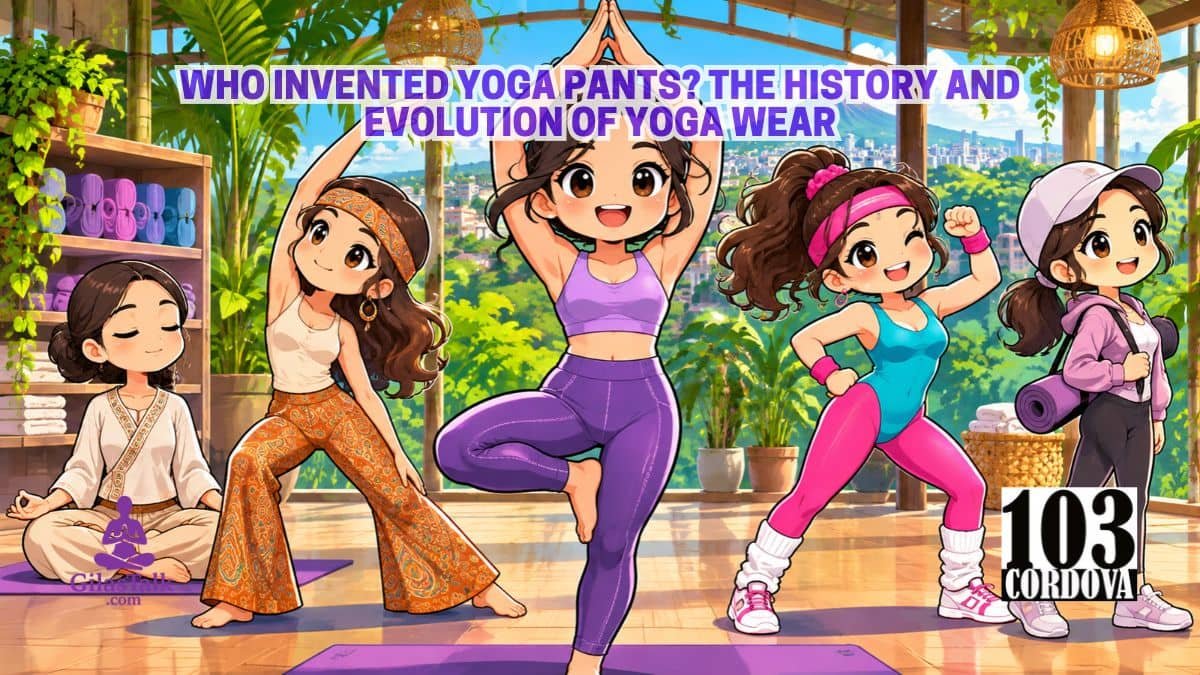
Have you ever wondered who invented yoga pants and how they became such a popular part of everyday fashion?
Although no single person is definitively recognized as the inventor of yoga pants, Canadian entrepreneur Chip Wilson helped popularize their modern commercial form after founding Lululemon in Vancouver, Canada, in 1998.
However, an important part of their history dates back to 1958, when American chemist Joseph Shivers invented spandex, an elastic synthetic fiber that transformed the clothing industry.
What began as specialized exercise apparel has evolved into a versatile wardrobe staple, worn both inside and outside fitness studios.
Let’s explore the fascinating history of yoga pants, the innovations behind their development, and how to choose suitable yoga clothing, particularly here in the Philippines.
Key Takeaways
- No single person is definitively recognized as the inventor of yoga pants.
- Joseph Shivers invented spandex in 1958, helping make modern stretchable activewear possible.
- Chip Wilson helped popularize modern yoga pants after founding Lululemon in 1998.
- The fitness and aerobics movements of the 1970s and 1980s helped popularize form-fitting exercise clothing.
- The rise of athleisure transformed yoga pants from specialized workout apparel into everyday fashion.
- Yoga pants and leggings share many similarities but may differ in design and intended purpose.
- Lightweight, breathable, and comfortable clothing can be particularly practical in the Philippines’ warm and humid climate.
- You don’t need expensive or specialized yoga clothing to enjoy the practice.
1. Who Invented Yoga Pants?
Unlike inventions with clearly documented origins, yoga pants developed gradually through advances in textile technology, sportswear design, and changing lifestyle preferences.
Two individuals stand out for their contributions to this development.
Joseph Shivers was an American chemist who invented spandex in 1958 while working for DuPont. His invention enabled manufacturers to create lightweight, stretchable garments with improved shape retention.
Chip Wilson was the Canadian entrepreneur who founded Lululemon in 1998. He recognized the commercial potential of clothing specifically designed for yoga practitioners, helping establish specialized yoga apparel as a successful market category.
However, stretchable exercise clothing existed long before Lululemon was established.
Rather than crediting one individual with inventing yoga pants, it is more accurate to view their development as the result of decades of innovation in textiles, fitness apparel, and fashion.
🧘 Yoga for Beginners in Marikina: Everything You Need to Know Before Your First Class
2. The Origins of Yoga Clothing
Yoga originated in ancient India and encompasses physical, mental, and spiritual practices. According to UNESCO, its traditions include physical postures, controlled breathing, meditation, and other techniques.
Long before modern activewear existed, yoga practitioners wore clothing suited to their cultural traditions, surroundings, and individual needs.
Specialized stretchable pants were not a requirement.
As yoga spread throughout the world, practitioners adapted their clothing to accommodate different styles of practice and personal preferences.
Loose trousers, shorts, tights, and other forms of exercise clothing offered various levels of comfort and freedom of movement.
Eventually, advancements in textile technology allowed manufacturers to develop specialized clothing that could accommodate bending, stretching, and twisting more comfortably.
🧘 How to Set Up Your Space for a Successful Yoga Class at Home
3. The Invention of Spandex in 1958
One of the most significant breakthroughs behind modern yoga pants was the invention of spandex.
In 1958, Joseph Shivers developed a lightweight synthetic elastic fiber while working for DuPont. His research focused on finding an alternative to the rubber-based materials previously used in foundation garments and shapewear.
According to the National Inventors Hall of Fame, Shivers developed a fiber capable of stretching considerably while retaining its elasticity and recovering close to its original dimensions.
Its applications eventually expanded into sportswear, swimwear, fashion, and other industries.
What Is the Difference Between Lycra, Spandex, and Elastane?
You’ve probably encountered these terms while shopping for activewear. Although they sound like different materials, they refer to the same general type of synthetic elastic fiber.
- Spandex: A generic name commonly used in the United States.
- Elastane: A generic name commonly used in Europe and other parts of the world.
- Lycra: A registered brand name for spandex or elastane fiber.
As explained by The LYCRA Company, Lycra is a fiber rather than a finished fabric.
Manufacturers typically blend elastane with materials such as nylon, polyester, or cotton to produce garments with varying degrees of stretch, softness, durability, and comfort.
These combinations help make modern yoga pants suitable for a wide range of movements.
🧘 Who Is the Father of Yoga? Patanjali’s Influence on Yoga, Meditation, and Mindfulness
4. How the Fitness Boom Influenced Yoga Pants
Before modern yoga pants became popular, the fitness industry was already changing how people dressed for exercise.
During the 1970s and 1980s, aerobics, dance workouts, and home exercise programs gained popularity.
Fitness personalities such as Jane Fonda helped bring exercise into people’s homes, while colorful leggings, leotards, headbands, and leg warmers became recognizable features of 1980s fitness fashion.
This movement helped introduce form-fitting athletic clothing to a wider audience and demonstrated that workout apparel could be both functional and fashionable.
By the late 1990s, growing interest in yoga and specialized activewear created opportunities for businesses to develop clothing specifically for yoga practitioners.
🧘 What are the Common Mistakes to Avoid in a Yoga Class for Beginners?
5. How Chip Wilson and Lululemon Popularized Yoga Pants
In 1998, Canadian entrepreneur Chip Wilson founded Lululemon in Vancouver, Canada.
Wilson identified an opportunity to develop technical athletic clothing designed specifically for women practicing yoga.
According to Lululemon’s official company history, the company opened its first retail space inside a local yoga studio in 1998, followed by its first official store in Vancouver in 2000.
Its approach combined functional athletic apparel with fashionable designs and community-based marketing.
Rather than treating yoga clothing as a minor category within the sportswear industry, Lululemon helped establish it as a distinctive commercial market.
Other activewear companies also contributed to the industry’s growth. Athleta, Nike, Adidas, and Under Armour expanded the range of performance clothing available to consumers.
Although Wilson cannot definitively be credited with inventing the first pair of yoga pants, his influence on their commercial development and popularity is significant.
🧘 Essential Tips on What to Wear to Yoga Class for Beginners

6. A Timeline of Yoga Pants Through the Years
The development of yoga pants reflects decades of innovation and changing attitudes toward fitness and fashion.
| Period | Historical Development |
| Before the 1950s | Yoga practitioners wore clothing suited to their traditions, surroundings, and practice. |
| 1958 | Joseph Shivers invented spandex, transforming the possibilities of stretchable clothing. |
| 1960s–1970s | Elastic fibers gained wider applications in fashion, swimwear, and sportswear. |
| 1980s | Aerobics and fitness trends helped popularize leggings and form-fitting exercise apparel. |
| 1998 | Chip Wilson founded Lululemon in Vancouver, Canada. |
| 2000 | Lululemon opened its first official store in Vancouver. |
| 2000s | Specialized yoga apparel continued to expand commercially. |
| 2010s | Athleisure gained widespread popularity, bringing yoga pants into everyday fashion. |
| 2020s | Yoga apparel continued evolving through diverse styles, functional features, alternative materials, and broader sizing options. |
These milestones illustrate how yoga pants gradually evolved rather than appearing as a single invention at a particular moment in history.
🧘 What is Kriya Yoga? How It Compares to Other Yoga Practices
7. The Rise of Athleisure: From Yoga Studios to Everyday Fashion
One of the most significant changes in the history of yoga pants was their transition from specialized exercise clothing to everyday casual wear.
This transformation is closely associated with the rise of athleisure, a fashion trend that combines athletic clothing with casual attire.
During the 2010s, athleisure gained considerable momentum as consumers increasingly embraced clothing that offered comfort, versatility, and convenience.
Yoga pants were particularly well suited to this trend. Someone could wear them during a workout, while running errands, when traveling, or simply while relaxing at home.
Here in the Philippines, yoga pants and leggings can also be practical options for walking, stretching, home workouts, and casual outings.
Their suitability, however, depends on the material, weather conditions, personal preferences, and dress requirements of the location.
What started as specialized fitness clothing has become a versatile option for everyday wear.
🧘 How to Choose Between Vinyasa Vs Yin Yoga for Your Fitness Goals
8. What Is the Difference Between Yoga Pants and Leggings?
Although people frequently use these terms interchangeably, yoga pants and leggings are not necessarily identical.
Yoga pants generally refer to clothing designed for yoga or similar physical activities, while leggings describe a broader category of close-fitting garments.
| Feature | Yoga Pants | Leggings |
| Primary purpose | Yoga, exercise, and casual wear | Fashion, casual wear, or exercise |
| Fit | Fitted, straight-cut, relaxed, or flared | Usually close-fitting |
| Fabric | Often designed for physical activity | Varies according to intended use |
| Waistband | May provide additional coverage and support | Available in various designs |
| Stretch | Generally designed to accommodate movement | Depends on fabric and construction |
| Breathability | Varies by material and design | Varies by material and design |
| Opacity | Ideally remains opaque during movement | Depends on fabric thickness, fit, and quality |
These distinctions are not absolute. Many modern yoga pants are also considered performance leggings, while ordinary leggings may be perfectly suitable for yoga.
Traditional flared yoga pants provide another option for those who prefer a less fitted design around the lower legs.
Ultimately, how well the clothing suits your practice matters more than what it is called.
🧘 Hot Yoga Vs Regular Yoga: Which One is Right for You?
9. How Modern Yoga Pants Have Evolved
Today’s yoga pants come in various styles, materials, and designs. Manufacturers have introduced features intended to improve comfort, movement, and convenience.
Some common developments include:
- High-waisted designs: Provide additional coverage and may help keep the waistband in place during movement.
- Four-way stretch: Allows fabric to stretch in multiple directions.
- Moisture-wicking fabrics: Help move perspiration away from the skin.
- Flat seams or seamless construction: May reduce friction and irritation.
- Compression fabrics: Offer a closer fit for those who prefer additional support.
- Functional pockets: Provide convenient storage for small personal items.
- Different lengths and sizes: Accommodate various body proportions and preferences.
- Flared and relaxed-fit designs: Offer alternatives to close-fitting leggings.
Not everyone needs these features. Your choice should depend on your comfort, budget, preferred style, and type of activity.
A simple pair of comfortable exercise pants may be just as suitable for yoga as a premium activewear product.
🧘 Ashtanga Yoga Vs. Vinyasa Yoga: Key Differences and Benefits Explained
10. How to Choose the Right Yoga Pants in the Philippines
When choosing yoga clothing in the Philippines, it’s worth considering our local climate.
According to the Philippine Atmospheric, Geophysical and Astronomical Services Administration (PAGASA), the country has a tropical and maritime climate, generally characterized by warm temperatures, high humidity, and substantial rainfall.
Your choice of yoga clothing can influence how comfortable you feel during practice, especially in warm or naturally ventilated environments.
Choose Lightweight and Breathable Materials
Lightweight clothing with good airflow can help you remain comfortable during yoga.
Nylon-elastane and polyester-elastane blends can be practical options, particularly when designed to manage moisture and dry quickly.
However, breathability depends on several factors, including fabric thickness, construction, and finish.
Cotton-blend clothing may also be suitable for gentle yoga sessions, although cotton tends to retain moisture and may dry more slowly during physically demanding activities.
Prioritize Freedom of Movement
Your yoga pants should allow you to bend, stretch, sit, and move comfortably without unnecessary restriction.
When trying on a pair, move through a few positions within your comfortable range of motion.
Check whether the waistband stays securely in place and whether the material allows you to move naturally.
Avoid clothing that feels excessively tight or requires constant adjustment.
Check Fabric Opacity
Some fabrics become transparent when stretched, particularly if they are thin or excessively tight.
If coverage is important to you, check the material under good lighting while bending or squatting within your comfortable range of motion.
Choosing clothing that provides your preferred level of coverage can help you feel more comfortable when practicing in a shared yoga space.
Consider Your Preferred Yoga Style
Different styles of yoga may call for different clothing preferences.
| Yoga Style | Suggested Clothing Characteristics |
| Hatha Yoga | Comfortable, flexible clothing suitable for controlled movements |
| Vinyasa Yoga | Secure, stretchable clothing that accommodates flowing sequences |
| Yin Yoga | Soft clothing suitable for extended periods in individual poses |
| Restorative Yoga | Relaxed, comfortable clothing, with additional layers when needed |
| Hot Yoga | Lightweight, moisture-wicking clothing suitable for a deliberately heated environment |
The temperature and ventilation of your practice space also matter. An air-conditioned room may require different clothing from a naturally ventilated or outdoor setting.
Practicing yoga in the Philippines’ naturally warm climate is not necessarily the same as participating in a structured hot yoga session.
Regardless of your clothing choice, stay hydrated, be mindful of the temperature, and avoid pushing yourself beyond your physical capabilities.
Consider Your Budget
You don’t need imported or premium-branded yoga pants to enjoy yoga.
Affordable activewear available in the Philippines can be suitable, provided it offers adequate comfort, coverage, and freedom of movement.
Rather than focusing exclusively on brand names or prices, consider fabric quality, stitching, fit, and durability.
The best yoga clothing is the clothing that allows you to focus on your practice rather than your wardrobe.
11. The Cultural Impact and Controversies Surrounding Yoga Pants
Yoga pants have influenced more than the fitness and fashion industries. They have also become part of broader discussions about personal expression, body image, comfort, and social expectations.
For many people, yoga pants represent a preference for practical and comfortable clothing.
The availability of different designs and sizes also provides more opportunities for individuals to find garments that suit their needs.
However, their popularity has not been without controversy. Their form-fitting design has contributed to debates about dress codes, modesty, body image, and appropriate clothing in different environments.
In the Philippines, as elsewhere, clothing expectations can vary depending on the establishment, occasion, and cultural setting.
An outfit that is appropriate for a yoga studio or casual gathering may not meet the dress requirements of a workplace, school, religious venue, or formal occasion.
Personal comfort and respect for the setting are both worth considering.
More importantly, yoga should not be associated with having a particular body shape, wearing expensive clothing, or following fashion trends.
People of different ages, body types, backgrounds, and experience levels can participate in appropriately adapted yoga practices.
12. The Future of Yoga Pants: Sustainability and Innovation
As textile technology develops and consumer preferences change, yoga pants are likely to continue evolving.
Several areas may influence their future development.
Improved Fabric Technology
Manufacturers may continue developing fabrics with improved stretch recovery, moisture management, breathability, and durability.
These innovations could provide consumers with more comfortable and practical clothing options.
Sustainability and Environmental Responsibility
The clothing industry is exploring alternatives such as recycled polyester, recycled nylon, and responsibly sourced natural fibers.
However, a garment is not automatically environmentally friendly simply because it contains recycled or natural materials.
Manufacturing processes, resource consumption, transportation, garment lifespan, and disposal all contribute to its environmental impact.
Synthetic clothing can also release microfibers during washing, while blended fabrics may be difficult to recycle.
As consumers, we can make practical choices by purchasing clothing that meets our needs, following proper care instructions, and using garments for as long as they remain functional.
Greater Inclusivity
Broader sizing options, adjustable designs, different inseam lengths, and adaptive clothing may help make yoga apparel accessible to more individuals.
The future of yoga clothing should extend beyond appearance to include comfort, functionality, durability, and accessibility.
Conclusion
So, who invented yoga pants?
Although no single inventor is definitively recognized, Joseph Shivers and Chip Wilson made significant contributions to their development.
Shivers invented spandex in 1958, helping make modern stretchable activewear possible. Wilson later helped popularize specialized yoga apparel through Lululemon, which he founded in 1998.
Their contributions, combined with decades of textile innovation, fitness trends, and changing fashion preferences, helped transform yoga pants into a versatile form of athletic and casual clothing.
Here in the Philippines, choosing suitable yoga clothing is less about following international fashion trends and more about finding something comfortable, breathable, affordable, and appropriate for our climate.
Whether you prefer yoga pants, leggings, shorts, or loose-fitting exercise clothing, remember that yoga is ultimately about your practice, not your wardrobe.
Looking for a Yoga Space for Rent in Marikina City?
Having comfortable clothing is one part of enjoying yoga. Finding a suitable space where you can practice, teach, and focus on your movements is another.
If you’re a yoga instructor, wellness organizer, or practitioner planning a private or group yoga session, finding the right venue can help create a more enjoyable experience.
At 103 Cordova, we offer a yoga space for rent in Marikina City, Philippines.
Whether you’re planning to conduct a yoga class, organize a private practice session, or arrange a group yoga activity, we invite you to contact us to discuss your space rental requirements.
Our Location:
103 Cordova Tower, Marquinton Residences, Cirma Street, Barangay Sto. Niño, Marikina City, Philippines
For rental inquiries, availability, and booking arrangements:
- Mobile: 0917-622-5780
- Connect with us on Facebook
- Contact us through our website
Bring your practice, share your knowledge, and create meaningful yoga experiences at 103 Cordova.
Frequently Asked Questions (FAQ)
1. Who invented yoga pants?
No single person is definitively recognized as the inventor of yoga pants. However, Chip Wilson, the founder of Lululemon, is widely associated with popularizing their modern commercial form.
2. When were yoga pants invented?
There is no universally accepted invention date for yoga pants. The modern yoga apparel market gained momentum in the late 1990s, although stretchable exercise clothing existed decades earlier.
3. Did Lululemon invent yoga pants?
Lululemon helped popularize modern yoga pants and establish specialized yoga clothing as a successful commercial category. However, stretchable exercise apparel existed before the company was founded in 1998.
4. Who invented spandex?
American chemist Joseph Shivers invented spandex in 1958 while working for DuPont. His invention helped transform the production of stretchable clothing, including modern activewear.
5. What were yoga pants originally designed for?
Modern yoga pants were primarily designed to provide comfort, flexibility, coverage, and freedom of movement during yoga practice. Over time, they became popular for other physical activities and everyday casual wear.
6. Are yoga pants and leggings the same thing?
Not necessarily. Leggings generally have a close-fitting design, while yoga pants may be fitted, flared, straight-cut, or relaxed. However, many modern yoga pants are also classified as leggings.
7. Why are yoga pants so popular?
Yoga pants are popular because of their comfort, flexibility, versatility, and convenience. The rise of athleisure also helped establish them as everyday fashion rather than exclusively exercise clothing.
8. What is the best fabric for yoga pants in the Philippines?
There is no single best fabric for everyone. Lightweight and breathable nylon-elastane or polyester-elastane blends can be practical for warm and humid conditions. Cotton blends may also be comfortable for gentle yoga sessions.
Consider fabric construction, fit, ventilation, and your personal comfort when choosing what to wear.
9. Can men wear yoga pants?
Yes. Yoga pants can be worn by anyone who finds them comfortable and suitable for their practice. Fitted leggings, relaxed exercise pants, and stretchable shorts are among the available options.
10. Do beginners need specialized yoga pants?
No. Beginners can practice yoga in any comfortable clothing that allows sufficient freedom of movement. Specialized yoga apparel is optional.
11. Are expensive yoga pants worth buying?
Premium yoga pants may offer advantages in fabric quality, construction, durability, or performance. However, affordable alternatives can also be suitable. Price alone does not determine whether a garment is appropriate for yoga.
12. Can I rent a yoga space in Marikina City?
Yes. At 103 Cordova, we offer yoga space rental services in Marikina City, Philippines. Yoga instructors, practitioners, and wellness organizers may contact us to inquire about availability, rental arrangements, and the suitability of the space for their planned activities.
Content Disclaimer
This article is provided for general informational and educational purposes. Historical information is based on available records and referenced sources. As the precise origins of yoga pants are not definitively established, some aspects of their development may remain subject to further historical research.
References to individuals, companies, brands, and products are intended for informational purposes and do not imply affiliation, sponsorship, or endorsement.
Clothing and exercise-related recommendations should be adapted to individual preferences, physical capabilities, environmental conditions, and the nature of the activity. This article is not intended to replace professional medical advice, diagnosis, or treatment. Individuals with existing medical conditions, injuries, or physical limitations should seek appropriate professional guidance before beginning a new exercise program.
103 Cordova provides yoga space rental services. Rental availability, rates, facilities, permitted activities, and booking conditions should be confirmed directly before making a reservation.