
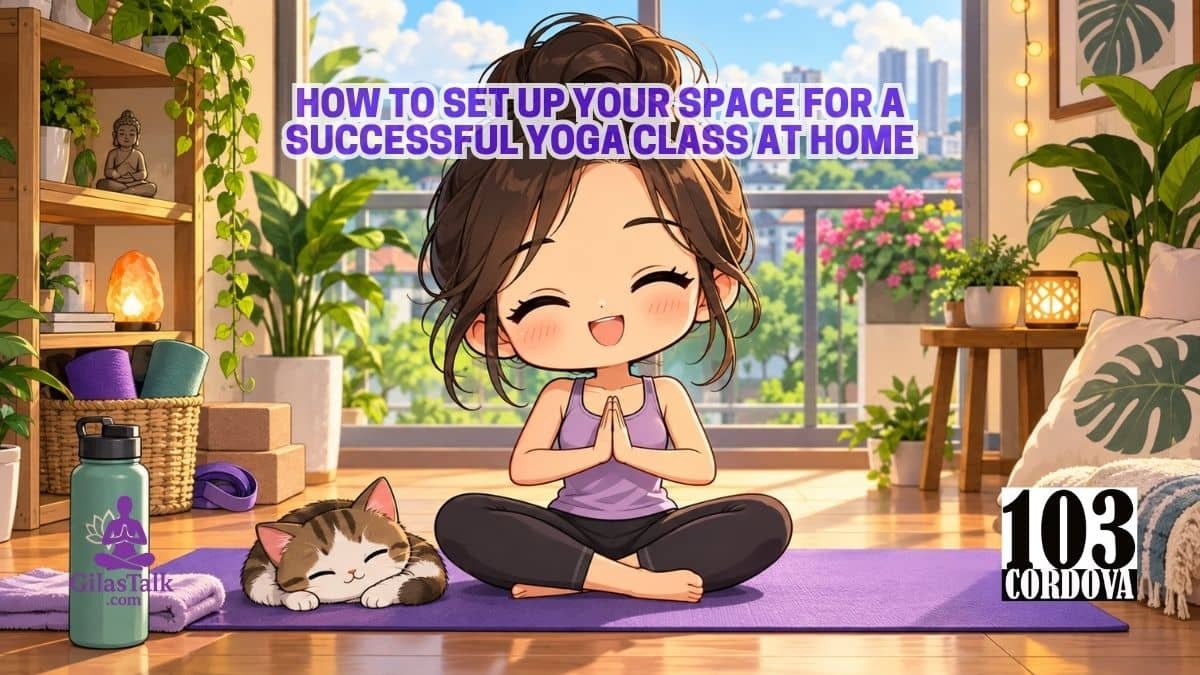
You don’t need a dedicated studio or a large room to enjoy yoga at home. A quiet corner with enough space to move, a comfortable yoga mat, and a few thoughtful touches can be enough to create an inviting place to practice.
Your surroundings can affect how easily you settle into your session. When your yoga area is comfortable, uncluttered, and free from unnecessary distractions, you can spend less time preparing and more time focusing on your breathing and movement.
This is especially helpful if you live in a condominium, apartment, or shared home where space may be limited. Your yoga area doesn’t have to be permanent, either. You can set it up before class and pack everything away afterward.
Here are 10 practical ways to create a safe, comfortable, and relaxing space for your yoga class at home.
Key Takeaways
- You don’t need an entire room for yoga. A clear area with enough space to move comfortably can work well.
- Choose a mat that provides a good balance of grip, cushioning, and stability.
- Keep the room comfortably ventilated, particularly during hot and humid weather.
- Have drinking water nearby and pay attention to how you feel when practicing in warm conditions.
- Keep useful props such as blocks, straps, blankets, or bolsters within reach.
- If you attend an online yoga class, position your device where you can see and hear the instructor without repeatedly straining your neck.
- Remove slippery rugs, electrical cords, furniture, and other potential hazards from your practice area.
- Your yoga space should work for your home and your needs; it doesn’t need to look like a professional studio.
1. Choose a Quiet and Comfortable Location
Start by finding an area where you’re unlikely to be interrupted. This could be a spare room, part of your bedroom, or an open area in your living room.
Before deciding on a location, put down your mat and check how much room you have.
Can you stretch your arms overhead and out to your sides comfortably? Can you extend your legs beyond the edges of your mat? Can you move between standing and floor poses without bumping into furniture?
Remember to look above you as well. Ceiling fans, hanging lights, shelves, and other fixtures can become hazards when you raise your arms.
If possible, choose an area with natural light and good ventilation. But don’t worry if your home doesn’t have the perfect location. Even a small area can work if you have enough room to move safely and comfortably.
🧘 Who Is the Father of Yoga? Patanjali’s Influence on Yoga, Meditation, and Mindfulness
2. Clear Away Clutter and Potential Hazards
Before starting your home yoga class, take a quick look around your practice area.
Move bags, toys, electrical cords, small furniture, breakable objects, and anything else that might get in your way. Make sure nearby rugs won’t slide when you step on them.
If you’re practicing on tiled flooring, which is common in many Philippine homes, check that both the floor and the bottom of your mat are dry before you begin. Moisture can make some surfaces slippery.
If you have children or pets at home, consider practicing at a time when you’re less likely to be interrupted. You may also want to keep pets away from your mat during poses where an unexpected movement could cause you to lose your balance.
You don’t need an empty room. You simply need a clear and safe area where you can move without worrying about what’s around you.
🧘 What are the Common Mistakes to Avoid in a Yoga Class for Beginners?
3. Choose a Yoga Mat That Suits Your Practice
Your yoga mat is likely to be the most important piece of equipment in your home setup.
Look for a mat that provides enough grip to help keep your hands and feet stable while offering sufficient cushioning for your knees and other pressure points.
The thickest mat isn’t necessarily the best choice. A very soft or heavily cushioned mat may feel comfortable during seated and kneeling poses but can make some standing and balancing poses feel less stable.
Consider your flooring, the type of yoga you practice, and your individual comfort needs.
If your knees, wrists, or other areas need additional cushioning, you can use an appropriate yoga pad or folded blanket for certain poses rather than relying solely on an extra-thick mat.
Most importantly, make sure your mat lies flat and doesn’t slide across the floor.
🧘 Essential Tips on What to Wear to Yoga Class for Beginners
4. Pay Attention to Ventilation, Temperature, and Hydration
Comfortable ventilation is particularly important when practicing yoga at home in the Philippines, where conditions can be hot and humid.
If the room feels stuffy, open a window when conditions allow, or use an electric fan or air-conditioning to keep the space comfortable. Position fans and their electrical cords so they don’t become hazards around your practice area.
On particularly hot days, you may find it more comfortable to practice during a cooler part of the day. You can also check current weather and heat-index information from PAGASA before doing a more strenuous session.
Keep drinking water nearby so you don’t have to leave your practice area to get it. Your hydration needs will vary depending on factors such as temperature, activity level, session length, how much you sweat, and your individual needs.
Most importantly, pay attention to how your body feels. Heat and humidity can make physical activity more demanding. If you become unusually dizzy, weak, nauseated, confused, or unwell, stop exercising and move somewhere cooler. Seek appropriate medical attention if symptoms are severe or don’t improve.
🧘 What is Kriya Yoga? How It Compares to Other Yoga Practices
5. Create Comfortable Lighting
Lighting can have a noticeable effect on the atmosphere of your yoga space.
Natural light works well when available, especially for morning or daytime practice. Just be mindful of direct sunlight entering the room, as it can make your practice area warmer.
If you practice early in the morning, in the evening, or in a room without much natural light, use comfortable indoor lighting that allows you to see your surroundings clearly.
Soft lighting can create a relaxing atmosphere, but don’t make the room so dark that you can’t safely see your mat, props, or nearby furniture.
You can also use battery-operated candles or other decorative lighting if you enjoy a softer atmosphere. If you use real candles, keep them well away from curtains, your mat, children, pets, and anything that could catch fire.
🧘 How to Choose Between Vinyasa Vs Yin Yoga for Your Fitness Goals

6. Keep Useful Yoga Props Within Reach
Yoga props can make certain poses more comfortable and accessible.
Depending on your practice, you might use yoga blocks, straps, blankets, cushions, or bolsters. Props can provide support and help you adapt poses to your current range of motion without forcing your body into a position.
However, you don’t need to buy every yoga accessory before you start.
For some exercises, suitable household items may work as alternatives. A folded blanket can provide extra cushioning, for example, while a firm cushion may provide support during some restorative poses.
Be careful when substituting household objects for yoga equipment. Whatever you use should be stable, secure, and appropriate for the exercise. Avoid objects that could slide, collapse, break, or tip over while you’re using them.
Keep the props you regularly use near your mat so you can reach them without interrupting your practice.
🧘 Hot Yoga Vs Regular Yoga: Which One is Right for You?
7. Add a Few Personal Touches
Your home yoga space should feel comfortable and inviting to you.
You might add a plant, a favorite piece of artwork, a photograph, an inspirational message, or an object that has personal or spiritual meaning.
If you enjoy plants, they can add color and a natural feel to the room. Just avoid placing pots where you could accidentally knock them over while moving.
It’s also a good idea to avoid leaving standing water in plant saucers or other containers, as these can become breeding sites for mosquitoes.
There’s no need to fill your yoga area with decorations. Too many objects can eventually become clutter.
A few carefully chosen items are usually enough to make the space feel personal without distracting you from your practice.
🧘 Ashtanga Yoga Vs. Vinyasa Yoga: Key Differences and Benefits Explained
8. Set Up Your Device and Audio Before Class
If you’re attending an online yoga class, think about where you’ll place your phone, tablet, laptop, or television before the session begins.
Position the screen where you can see your instructor without repeatedly twisting or straining your neck. Depending on the class, you may need to see the screen while standing as well as while sitting or lying on your mat.
If your instructor will be observing your movements online, check your camera angle before class so your practice area is visible.
Make sure the volume is loud enough for you to hear instructions clearly, and move charging cables and extension cords away from your practice area so they don’t become tripping hazards.
Turning off unnecessary notifications can also prevent calls, messages, and social media alerts from interrupting your session.
If you enjoy background music, keep it at a level that still allows you to hear your instructor clearly and pay attention to your breathing.
🧘 Why Chair Yoga Training Is Essential for Office Workers
9. Make Your Home Yoga Practice Easy to Start
Consistency becomes easier when practicing yoga doesn’t require a lot of preparation.
If possible, store your mat and props together in a basket, cabinet, shelf, or designated corner. Even if you can’t keep your yoga area permanently set up, having everything in one place makes it easier to get started.
You may also find it helpful to practice at roughly the same time on certain days. A regular schedule can make yoga easier to incorporate into your routine.
At the same time, your routine doesn’t need to be rigid.
Some days you may have time for a full class, while on others a shorter practice may be more realistic. The goal is to create a routine that fits your lifestyle rather than turning yoga into another obligation.
🧘 Why Somatic Yoga Training is a Game Changer for Stress Relief
10. Keep Your Yoga Area Clean and Ready
A clean space is much more inviting when it’s time for your next yoga session.
After practicing, return your props to their usual place and clean your mat according to the manufacturer’s care instructions.
This can be particularly important if you sweat heavily during a warm or humid session. Allow your mat, towels, blankets, and other damp items to dry completely before storing them.
Regularly sweep, vacuum, or clean the surrounding floor and remove dust from nearby surfaces.
During the rainy season, pay additional attention to moisture and dampness in your practice area. Avoid practicing on wet or slippery flooring, and make sure mats and fabric props are completely dry before putting them away.
You don’t need to thoroughly clean your entire yoga area after every session. A few minutes of tidying can be enough to keep it comfortable and ready for next time.
🧘 Deepen Your Understanding of Yoga
Your Yoga Space Doesn’t Have to Be Perfect
Creating a yoga space at home isn’t about having a large room, expensive equipment, or a picture-perfect setup.
It’s about creating an environment where you have enough room to move safely, breathe comfortably, and give your practice your attention.
Start with the essentials: a clear area, a suitable mat, comfortable temperature and ventilation, adequate lighting, and minimal distractions. From there, you can add props, music, plants, decorations, or other elements that make the space more enjoyable for you.
Most importantly, let your yoga space adapt to your home and your needs.
A thoughtfully arranged home setup can make it easier to practice between classes. At the same time, practicing with a qualified yoga instructor can provide additional guidance on technique, alignment, and appropriate modifications.
Frequently Asked Questions
1. How much space do I need for yoga at home?
You don’t need an entire room. You need enough space for your mat plus sufficient clearance to extend your arms and legs and move through poses without hitting furniture or other objects.
Check the space above you as well for ceiling fans, hanging lights, shelves, and other fixtures.
2. Do I need air-conditioning to practice yoga at home in the Philippines?
No. Air-conditioning isn’t necessary for most home yoga practices. The important thing is that the environment is reasonably comfortable and well-ventilated.
Depending on the weather and your home, you might use natural ventilation, an electric fan, or air-conditioning. During very hot or humid conditions, consider practicing during a cooler part of the day and pay attention to how your body responds to the heat.
3. Should I drink water during yoga?
It’s sensible to have drinking water available, particularly in hot or humid conditions. Individual hydration needs vary depending on factors such as temperature, activity intensity, duration, and how much you sweat.
There’s no need to force yourself to drink large amounts during a session. Drink according to your needs and pay attention to signs that you may be becoming overheated or dehydrated.
4. Do I need special equipment to practice yoga at home?
Not necessarily. A suitable yoga mat and comfortable clothing may be enough to get started.
Yoga blocks, straps, blankets, and bolsters can be helpful for certain poses and modifications, but you don’t need to purchase everything at once. Your instructor can help you determine which props are useful for the type of yoga you’re practicing.
5. Is a thick yoga mat better?
Not necessarily. A thicker mat can provide additional cushioning, but a very soft mat may make some standing and balancing poses less stable.
Look for a mat that gives you an appropriate balance of cushioning, grip, and stability.
6. Can I use household items instead of yoga props?
For some poses, suitable household items may provide support. A folded blanket or firm cushion, for example, may be useful in certain situations.
However, don’t substitute an object if it could slide, tip over, collapse, or break when you put pressure on it. Ask your instructor if you’re unsure whether an alternative is appropriate.
7. Where should I put my phone or laptop during an online yoga class?
Place your device where you can comfortably see and hear the instructor from your mat. Ideally, you shouldn’t have to repeatedly twist your neck or move into an awkward position just to see the screen.
Keep chargers, extension cords, and other cables away from the area where you’ll be moving.
8. What is the best time to practice yoga at home in the Philippines?
There isn’t one best time for everyone. Choose a time that fits your schedule and allows you to practice consistently.
If your home becomes particularly hot during the middle of the day, an early-morning or later session may be more comfortable. During periods of high heat, consider current weather and heat-index conditions when planning more strenuous physical activity.
9. Is it better to practice yoga at home or attend a class?
Both can have a place in your routine.
Practicing at home offers convenience and flexibility, while attending a class gives you access to an instructor who can provide guidance and suggest appropriate modifications.
Many people find that combining the two works well: use classes to learn and develop your practice, then use home sessions to practice between classes.
10. Can beginners practice yoga at home?
Yes, although beginners may benefit from starting with beginner-appropriate classes or instruction rather than attempting unfamiliar or advanced poses without guidance.
Learn movements gradually, follow appropriate modifications, and avoid forcing your body into positions that cause pain.
Join Our Yoga Classes in Marikina City
Your home yoga practice can be a convenient way to stay active between classes, but you don’t have to practice alone.
If you’d like guidance from an instructor or simply enjoy practicing yoga with others, we’d be happy to welcome you to our classes at 103 Cordova Tower, Marquinton Residences, Cirma Street, Sto. Niño, Marikina City.
Whether you’re new to yoga or already have experience, our classes provide an opportunity to develop your practice in a welcoming environment with guidance from our instructors.
Ready to practice with us?
Call or text us at 0917-622-5780, message us on Facebook, or use our website’s contact form to ask about our current class schedules and availability.
What you learn during class can help you feel more confident practicing at home, while your home sessions can help you stay consistent between classes.
Content Disclaimer
The information in this article is provided for general educational and informational purposes only. It is not medical advice and should not be used as a substitute for professional medical advice, diagnosis, or treatment.
Yoga is a form of physical activity, and not every pose, class, or practice is appropriate for every person. Individual needs can vary depending on age, fitness level, mobility, pregnancy, injuries, medications, medical conditions, and other factors.
If you have an existing health condition, a recent injury, persistent pain, mobility concerns, are pregnant or postpartum, or are unsure whether a particular form of yoga is appropriate for you, consider consulting a qualified healthcare professional and inform your yoga instructor before participating.
During practice, work within a comfortable range of motion and use appropriate modifications when needed. Avoid forcing yourself through sharp or worsening pain.
Stop exercising if you experience concerning symptoms such as chest pain, fainting, severe shortness of breath, confusion, or severe or persistent dizziness, and seek appropriate medical care.
The information in this article is general in nature and may not account for your individual circumstances.